The Platte Institute, initiated in 2008, was Nebraska’s first free market think tank. It is a non-partisan, non-profit research and educational institute. It was founded on the belief that protection of the freedoms and quality of life that Nebraskans enjoy is best served by encouraging free enterprise initiatives and promoting individual responsibility and dialogue. The institute’s staff and scholars study public policy issues and develop proposals to increase economic opportunity, while protecting the individual rights of Nebraskans.
The OpenSky Policy Institute is also deemed a non-partisan think tank, focusing on tax and budget issues. OpenSky began its work in 2011, after three years of organizational planning. OpenSky’s mission is to improve opportunities for every Nebraskan by providing impartial and precise research, analysis, education and leadership.
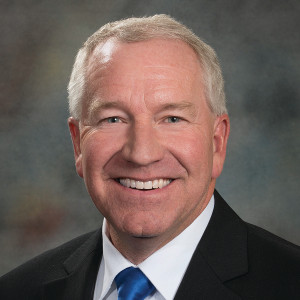
Both the Platte Institute and the OpenSky Policy Institute have worked on proposals for tax relief. Senator Jim Smith of Papillion introduced LB 357, on behalf of the Platte Institute. Senator Al Davis of Hyannis introduced LB 280 for OpenSky.
LB 357 proposes to invest $40 million a year over the next two years from the Cash Reserve Fund to provide immediate income tax relief to families and businesses. The proposal would gradually reform Nebraska’s income tax system with a goal of reducing the top rate to 5%, down from the current rate of 6.84%, and replacing the bottom rate of 2.46% with a 0% tax bracket. It also lowers the top corporate income tax rate from 7.81% to 5%. The proposal would freeze property tax rates while relieving local governments of unfunded state mandates. It is envisioned that income tax relief would be achieved entirely with state spending restraint, primarily by reducing the rate of growth in state spending. Since the cash reserve will be used for the first two years of the proposal, spending reductions are delayed until 2017.
The Platte Institute developed their long-term tax plan to provide more opportunities for Nebraska families and to create a business environment that is more competitive with other states. They believe that more savings for families and businesses will ultimately result in accelerated business creation, greater job growth and a vibrant, expanding state economy.
LB 280 aims to better balance the three major sources of taxes in our state – property, sales and income taxes. OpenSky recognized that the agriculture community is picking up a larger portion of funding for schools, without a corresponding growth in population or income, as agricultural income hasn’t risen as fast as land values. Their proposal would allow for the reduction of property taxes statewide, placing an emphasis on agricultural land owners.
As proposed in LB 280, agricultural land valuation would be reduced for purposes of calculating the school state aid formula from 75% to 65% of actual value. Furthermore, the bill would reduce the property tax levy cap on local school districts from $1.05 to 80.5 cents. To compensate for the lower property tax revenue, the proposal would impose a local income tax of at least 19.4% of a person’s state income tax liability. This revenue would be included as part of the resources calculation in the state aid formula, thereby assessing a community’s ability to pay. Finally, the bill establishes a foundation aid component for the state aid formula, which is a per-pupil amount that would go to every district, to guarantee a minimum level of support.